In Weather Eye last week, we talked about the increase of “freak weather events” and why Northern Europe will have to update its infrastructure to adjust to a rapidly changing climate.
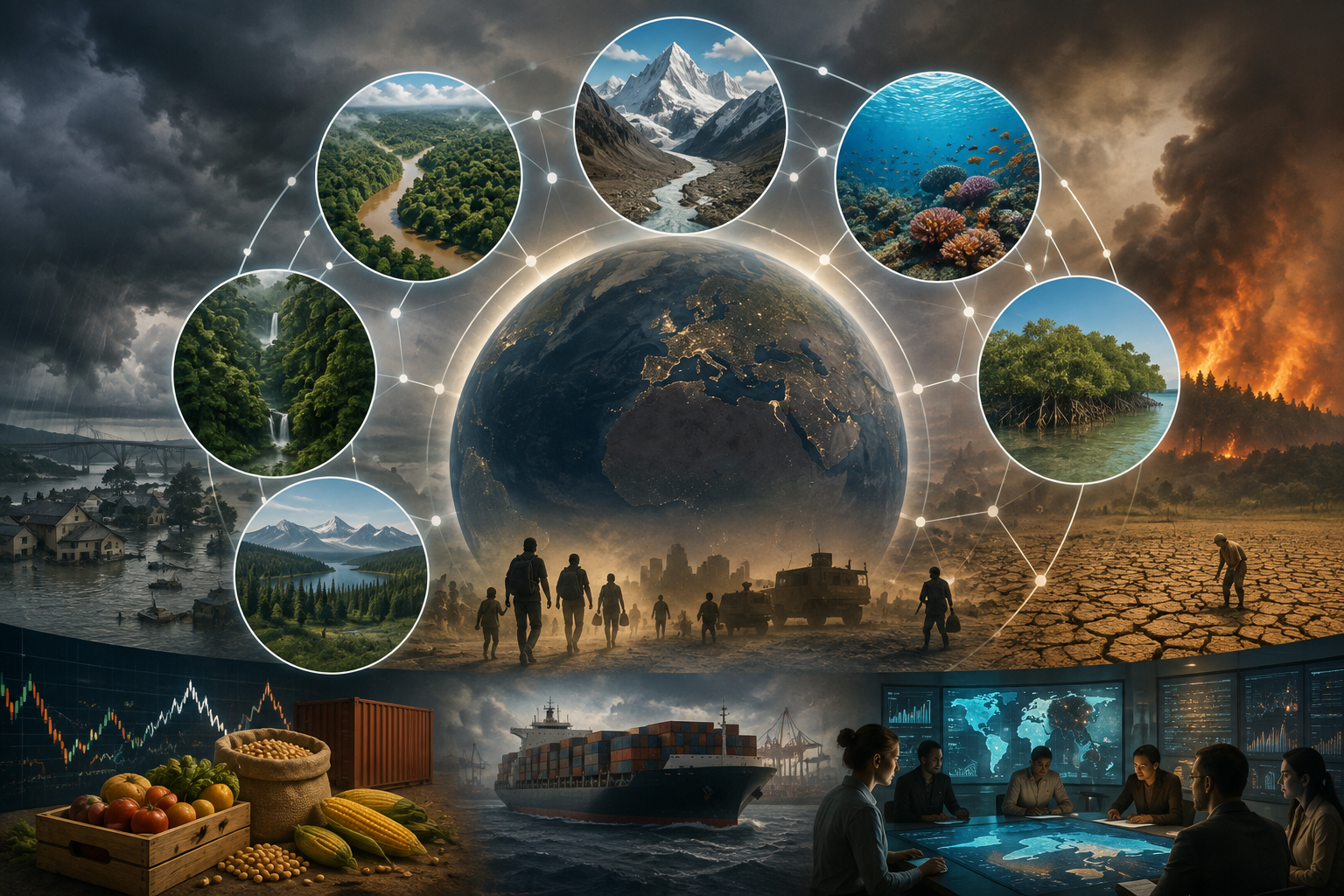
Earlier this year the Government published an assessment of a related and less discussed problem. It had the (rightly) alarming title of Global biodiversity loss, ecosystem collapse and national security. It was also debated in the House of Lords. The report identified six ecosystems whose degradation would matter to the United Kingdom and to global biodiversity, among them the Amazon, the Congo Basin, the Himalayas, the coral reefs and mangroves of South East Asia, and the boreal forests of Canada and Russia. All of them, the assessment argued, will have an impact on the UK and on British security.
It is, of course, difficult to put a timeline on ecosystem collapse, but we are already aware of the potentially catastrophic consequences of it. A shift in Himalayan hydrology impacts water supply for a fifth of humanity. Amazonian dieback changes rainfall patterns that underwrite South American agriculture, which underwrites global commodity prices. Congo Basin degradation is happening where governance is weakest, which is precisely where its effects are hardest to contain.
These are the conditions under which conflict, displacement, organised crime and state failure become more likely, and they unfold on ecological timescales that bear no relation to electoral or budgetary ones.
The picture for the UK alone is also troubling, particularly around food security. Britain grows a little over half of what it eats, and only 16% of its fresh fruit. It also stopped making ammonia several years ago, so the feedstock for domestic fertiliser production is now entirely imported. Defra's own food security report notes that some supply chains have single points of failure and depend on inputs from a very small number of countries. The distance that makes these risks feel remote is exactly what makes them hard to see coming, because there is no obvious domestic signal until a price moves or a shipment stops. We are exposed to the health of ecosystems over which we have no control.
An important challenge is that the problem is complex rather than merely uncertain, and complexity is the thing that actually paralyses institutions. Risks of this kind cascade across ecological, economic, social and political systems, amplifying in some conditions and dissipating in others, and they arrive on a timescale that fits no existing planning cycle. Confronted with that, the honest instinct is to commission more analysis. But working at the level of the symptom produces slower decisions and value left on the table, and the cycle compounds. The alternative is better preparation, meaning scenarios you can argue with, exercises that expose the gaps before a crisis does, and indicators that tell you what to watch and what to do when it moves.
Defra is now commissioning a three-year research programme to build exactly that, part of the wider RESET programme run with NERC, and it is looking for a consortium rather than a single supplier. We think this is one of the more important pieces of public research being tendered this year, and we hope to bid. Pharos will bring the strategic foresight, the scenario work and the wargaming, which is our craft but only one part of what is needed. The rest calls for people we do not pretend to be, including ecologists and earth systems scientists, security analysts, economists, regional specialists, food systems and supply chain researchers, and people who can build indicators and early warning that Government can actually operate. If that describes you or your institution, we would like to hear from you. The deadline is early September, which is soon, so please do get in touch as soon as you can if you’re interested, either via LinkedIn or [email protected]