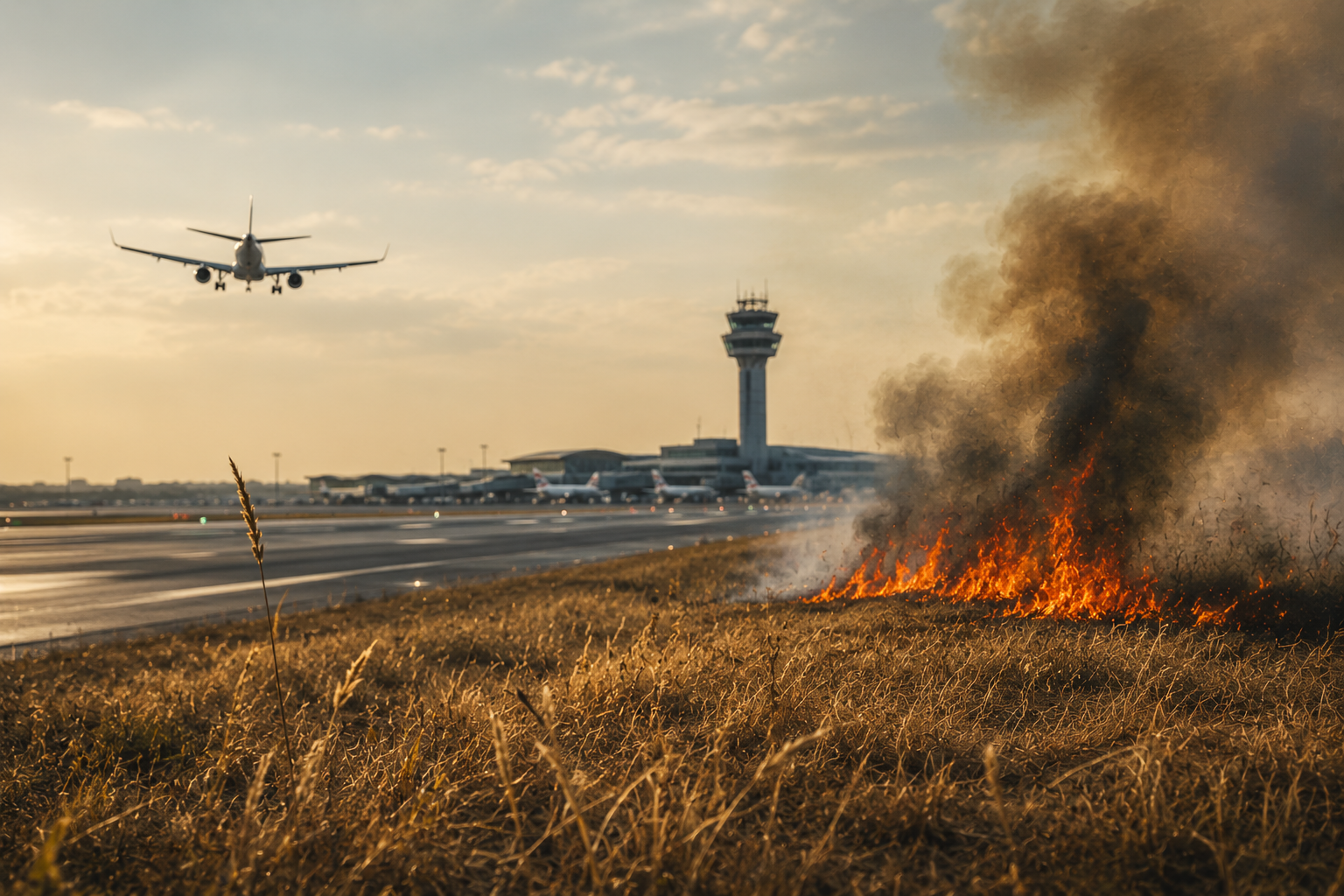
Something unusual happened to me last week. On a flight to London, my flight was suddenly diverted to Manchester. There was a grass fire next to one of the runways, causing chaos at the airport.
A few years ago, we’d have thought that a grass fire in England would be well outside of the norm. But this year it came as little surprise. Looking out of the window on an earlier flight, I couldn’t help but notice that England’s green and pleasant land had rapidly become England’s yellow and parched land.

We’ve just seen the first July on record in which the weather station at Kew Gardens didn’t record a single drop of rain. And wildfires in France and Spain have become an annual news story.
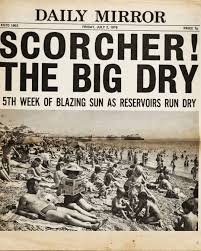
What was once anomalous risks becoming the norm. Hotter, drier conditions over a prolonged period of time have been prevalent over the past few summers. This raises the important question of whether the infrastructure of a Northern European island is adequately designed for the conditions it is likely to face. What once seemed like edge cases, worthy of “Phew What A Scorcher” headlines in the red top tabloids, have become increasingly familiar.
This is where foresight and planning become crucial to infrastructure decision-making.
Infrastructure is, in one sense, a bet on the future. Railway tracks, reservoirs and runways aren’t just concrete and steel. They embody assumptions about temperatures, rainfall, demand and failure modes. Infrastructure built for a rainy island with inclement weather may not be resilient enough for an island that increasingly experiences sustained periods of 30-degree-plus temperatures and little rainfall.
The UK’s Climate Change Committee (CCC), the independent statutory body that advises government on climate change, warns that this is already becoming an infrastructure problem. Extreme heat can buckle railway tracks and force speed restrictions, while also causing power lines to sag just as demand for electricity for cooling rises. More importantly, the CCC argues that modern infrastructure systems are increasingly interconnected: transport relies on power and communications, while failures in electricity can ripple through transport, telecoms, water and other essential services. Its 2025 assessment warns that failures in one system can have “cascading impacts” across others; in 2026 it went further, calling for transport, energy and telecommunications infrastructure to be designed and maintained to operate safely under future climate conditions, rather than those of the past.
Western countries face the challenge of seeing infrastructure that once worked well already buckling (sometimes literally) under the pressure of changing temperatures. Their challenge now is to consider both where new infrastructure needs to be developed and where existing infrastructure can be retrofitted or redesigned.
This is, of course, where foresight comes in. As we often acknowledge on The Weather Eye, if you wait for the crisis to happen, you have almost certainly left it too late. By simulating and modelling different scenarios and potential futures now, infrastructure decisions can be made intelligently and proactively, rather than in a reactive panic. The question is not whether we can predict exactly what the next extreme event will be, but whether we can build systems capable of coping when yesterday’s edge cases become tomorrow’s normal conditions.