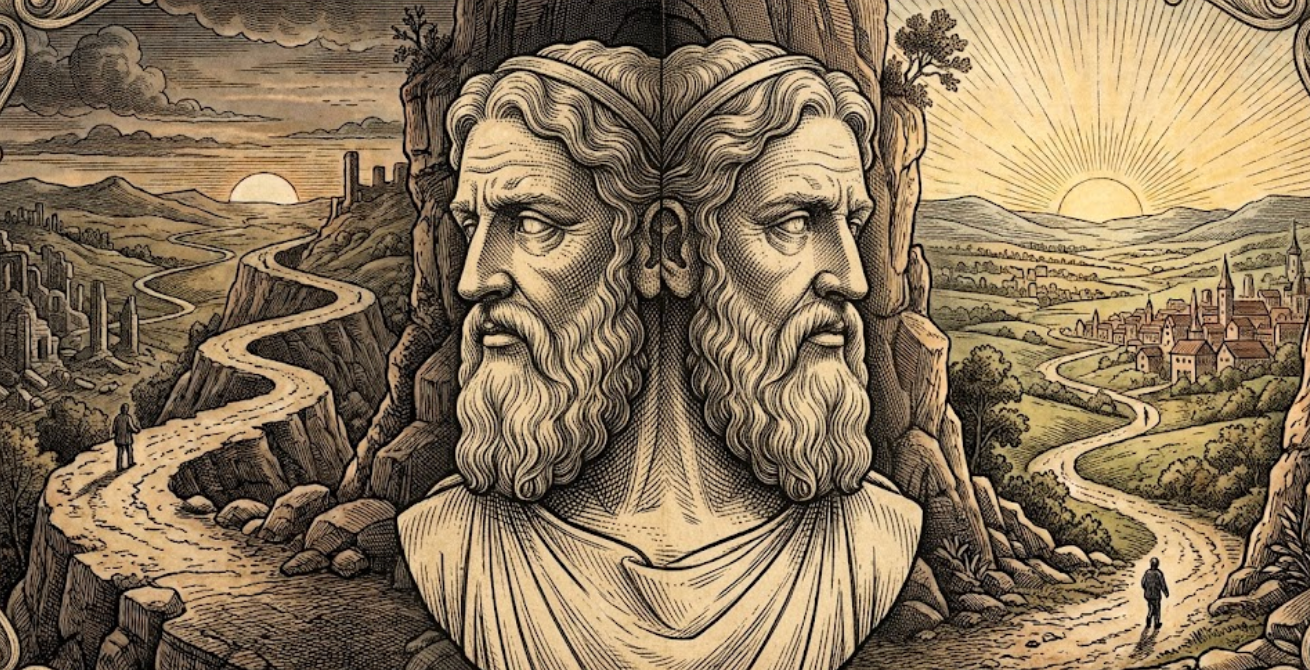
Today is the first day of the Hebrew, or Jewish, new year. These traditions we build to mark a new cycle are one of our ways to manage our relationship with the passage of time, and with our own temporality.
Though they mark a new beginning, the Jewish high holidays are a time dedicated to reflection, rather than resolutions. In that way, they ask us to choose who we will be by reflecting on who we were. The next ten days are meant for soul-searching, what is called in Hebrew “calculus of the soul”. The self observes the year past, what we have done, how we showed up towards others, and asks for forgiveness from anyone we may have wronged. These days are focused on the relationship between people, and within it, our relationship to ourselves and the people we want to be. By definition, absolution cannot come from anything transcendent.
Of course, not everyone takes the meaning of the holidays seriously, and many of us might rarely be honest with ourselves in a way that serves this concept properly. But I think there is a real value in exploring the ideas sitting at the core of rituals that might have lost their essence over many years of holding tightly to their form.
Even if you don’t regularly engage in foresight, we are all, in some form or another, in the business of time. Who are we if not what we have done, and will do, with the time we have? Our sense of self requires forms of reflection where we take the time to choose. Therein lies our agency, our decisions, sitting at the core of what it means to be human. Without it, we lose any notion of ethics or personal responsibility.
It is for this reason that we continue to hold tight to the idea that human agency is innately our own. That people are accountable for their actions. In this regard, the current debate about the role of technology in our lives is, appropriately, centred on its impact on our agency and autonomy. This is relevant to feeds optimised to hold our attention, quietly narrowing the choices placed in front of us and nudging us mostly by triggering outrage; and it is increasingly critical for how we use AI agents trusted to do much of the thinking for us. This is, of course, not to say we should do everything with our own cognition alone lest we lose our humanity. But can we make sure the reliance on the machine does not slip into export of choice?
At the end of the day, as we will come full circle to another new year, we may take the chance to reflect, and discover that however we came to make our decisions, and whether we offload the toll of making them elsewhere, they were ultimately our own to reckon with.