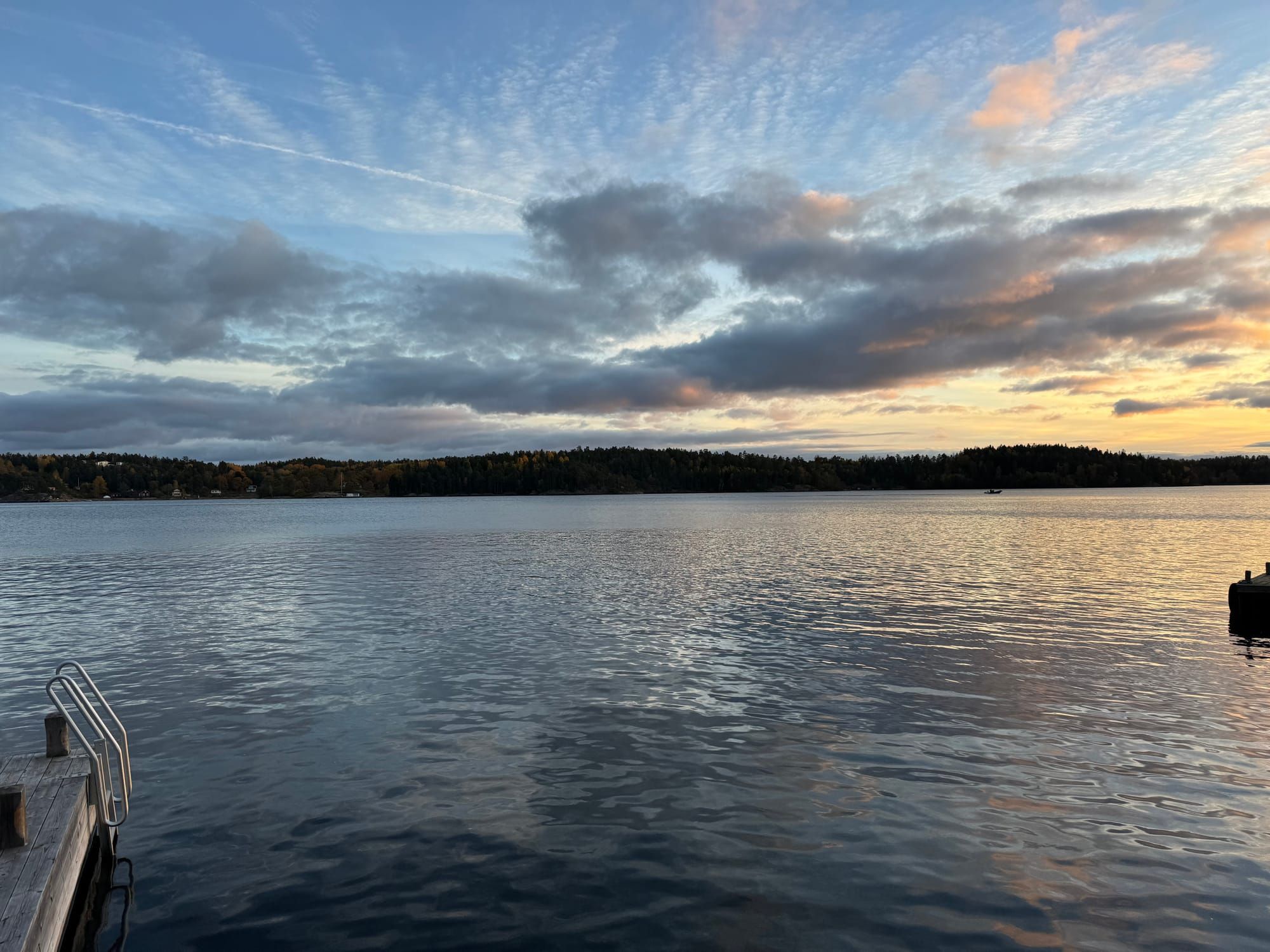
It's been a year since we launched Pharos, making this week a good week to regroup and reflect at the place where it all began. That is on the wonderful island in the Swedish archipelago where Nicklas has a charming house. And who wouldn't be wowed by views like this.
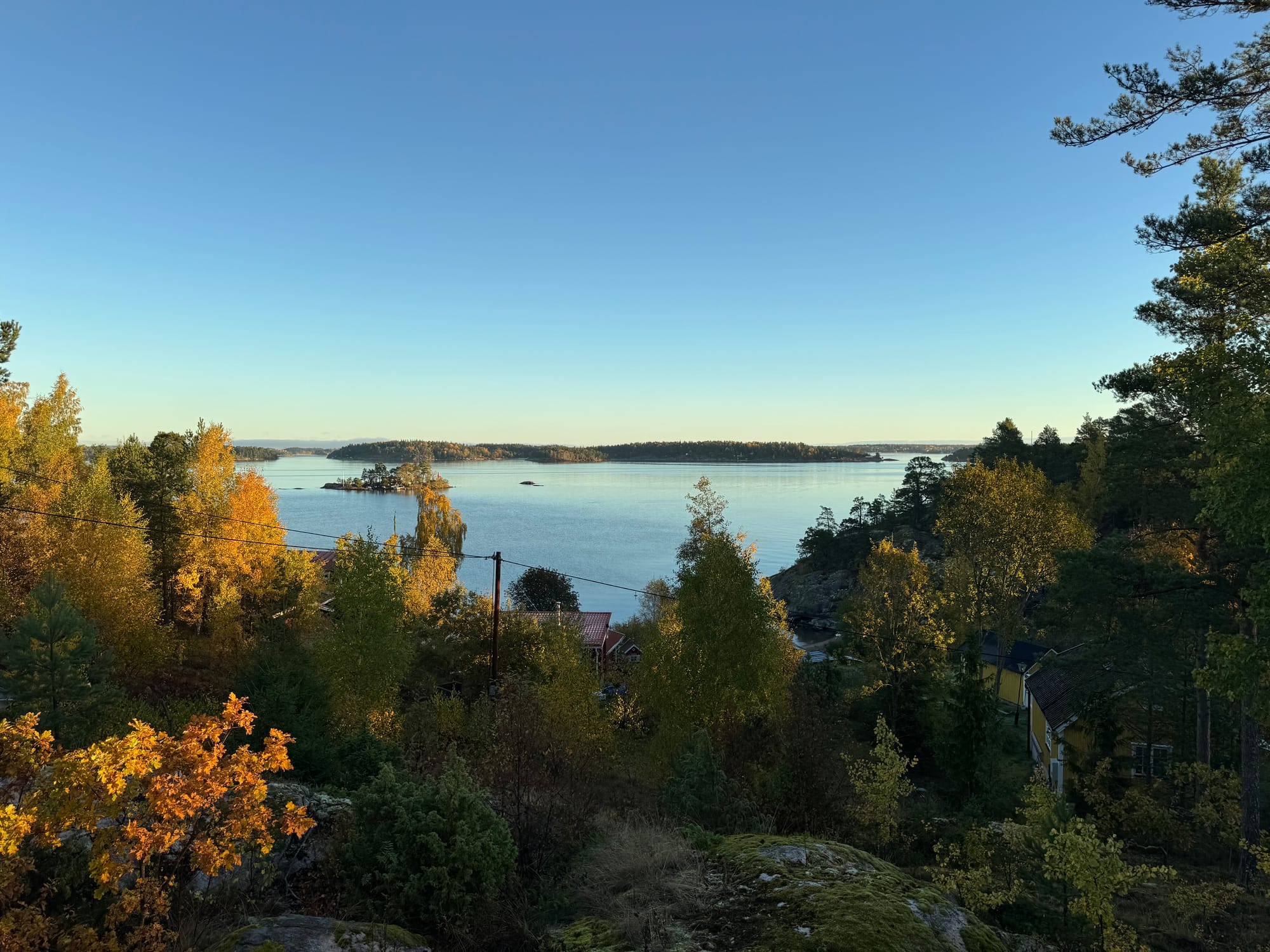
A year on, we're more confident than ever in our theory of change.
Our starting point is that the modern world is defined by growing complexity, driven by accelerating technological change, shifting geopolitics, environmental pressures and a host of other forces. The result is greater uncertainty, which can all too easily lead to paralysis in decision-making.
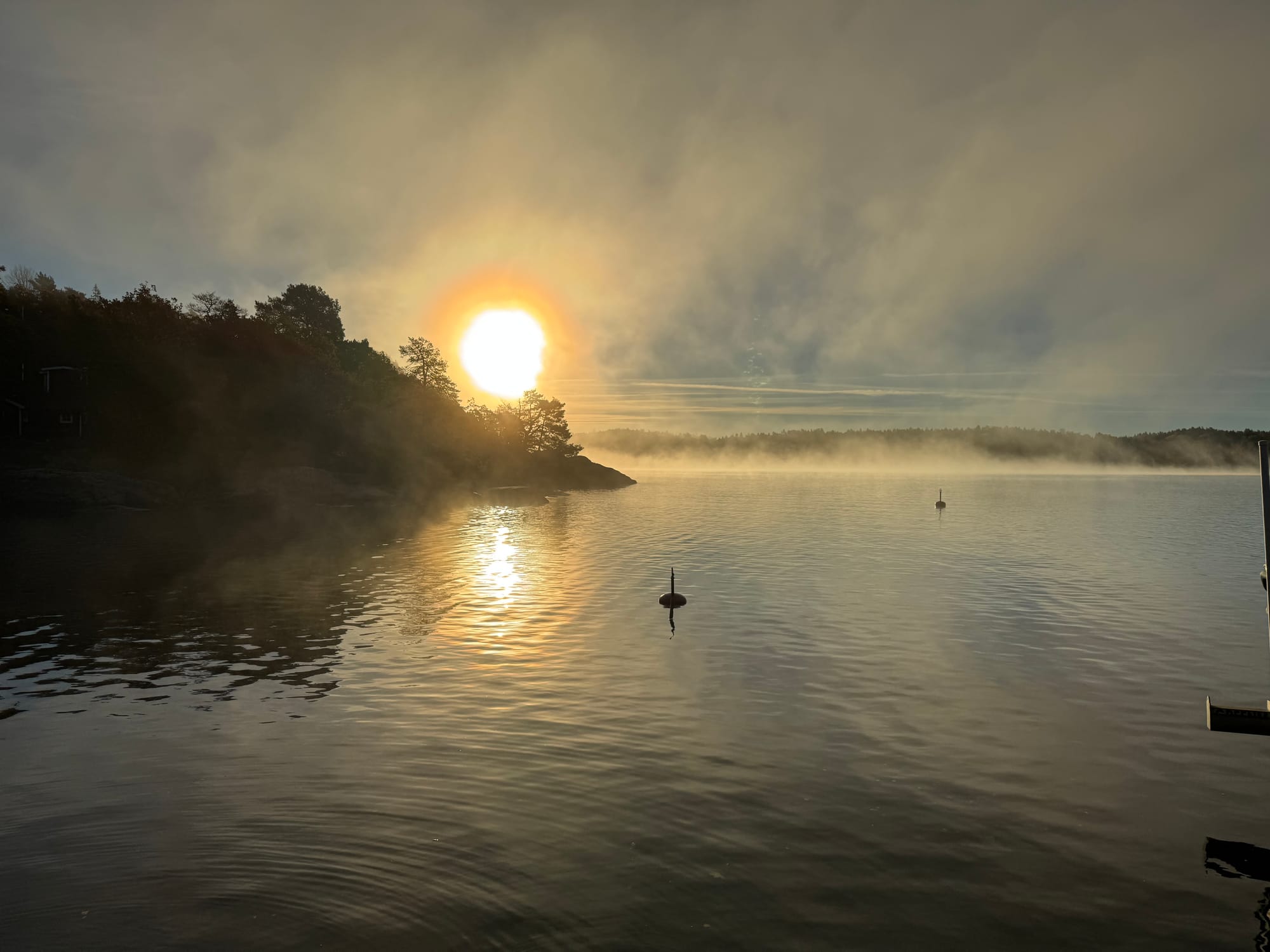
Our ambition at Pharos is to use Futures Intelligence to help clear that fog (which also gives me an excuse to post this photograph).
We believe that decision-makers who better understand the landscape in which they're operating, the forces shaping it and the different ways the future might unfold are much better placed to make informed choices.
Traditional foresight methods remain important, but we're convinced there's enormous scope for innovation. In particular, we can move beyond the familiar problem of foresight exercises that produce interesting reports, only to gather dust on a shelf.
And the good news is that technology is opening up entirely new ways of doing this.
- We can tailor our tools to the question. Rather than starting with an established methodology and fitting the problem around it, we can build approaches around the specific challenges an organisation faces.
- We can keep our understanding of the future live. New evidence can continuously inform and update scenarios, making them more useful for real-world decisions.
- We can make foresight much more specific. Drawing on a far wider range of information, we can explore how global trends might play out in particular places, sectors or organisations.
None of this diminishes the importance of human judgement. Quite the opposite. Technology can help us better understand complexity, explore possibilities and challenge assumptions. But ultimately, it's people who have to make decisions. Our job is to combine these new capabilities with experience, expertise and judgement to help them make better ones.
For us, this means thinking less in terms of standard foresight products and more about building bespoke tools and capabilities, always guided by the questions that matter most to the organisations we work with.
It's been a fascinating first year, with plenty of lessons along the way. We're leaving the beauty of the Swedish countryside both exhilarated by what we've achieved and excited about what's to come.
We'll also be updating Weather Eye much more regularly, sharing some of the ideas, developments and questions we're exploring. Please spread the word.
And if you'd like to talk about how we might work together, do drop us a line at [email protected].